


How to Choose and Care for A Frame Drum
Around the world, the frame drum—also called the hoop drum or shamanic drum—is honored as more than just an instrument. It is a way to remember the heartbeat of the Earth, to gather the people, to pray, to invoke, to grieve, to celebrate, and to honor the cycles and unity of life.
When you choose a frame drum, you’re not just picking a size or a skin. You’re entering into relationship—with sound, with tradition, with the living spirit of the drum itself.
This guide is here to help you:
- Understand the different types of frame drums (hide and vegan/synthetic)
- Choose the ideal size for your body and practice
- Consider the animal “medicine” qualities of natural hides
- Navigate humidity, climate, and care
- Select beaters and cases that support your drum
- Welcome your drum into your life in a respectful, intentional way
- Explore the possibility of spirit painting and imagery as part of your relationship with the drum
As always, if you’d like to listen to specific drums, or want support choosing, you’re warmly invited to call us for a virtual listening session or consultation.
1. The Frame Drum at Sunreed™
At Sunreed™, we offer both natural hide drums and vegan/synthetic-head drums, each carrying its own gifts.
Our Traditional Native American frame drums are handmade by Indigenous makers, including Maidu and Navajo drum makers, working in prayer and ceremony. Many of our drums are crafted in the Lakota/Plains style, with traditional four-direction lacing that is comfortable to hold for long periods.
Each drum is made with:
- Prayerful intention
- Deep respect for the animal and wood
- Strong, tight lacing and full wrapping to withstand long-term, intentional use
- Craftsmanship that helps the drum hold its tone across a range of environmental conditions
Alongside these, we also offer vegan/synthetic frame drums, such as the REMO Buffalo and related designs. These drums use high-quality synthetic heads that keep their voice in any weather—humid or dry—and require very little maintenance.
Both paths—hide and vegan—can be sacred and powerful. The “right” drum is the one that aligns with your body, your values, your climate, and your way of working with sound.
2. Natural Hide vs Vegan (Synthetic) Frame Drums
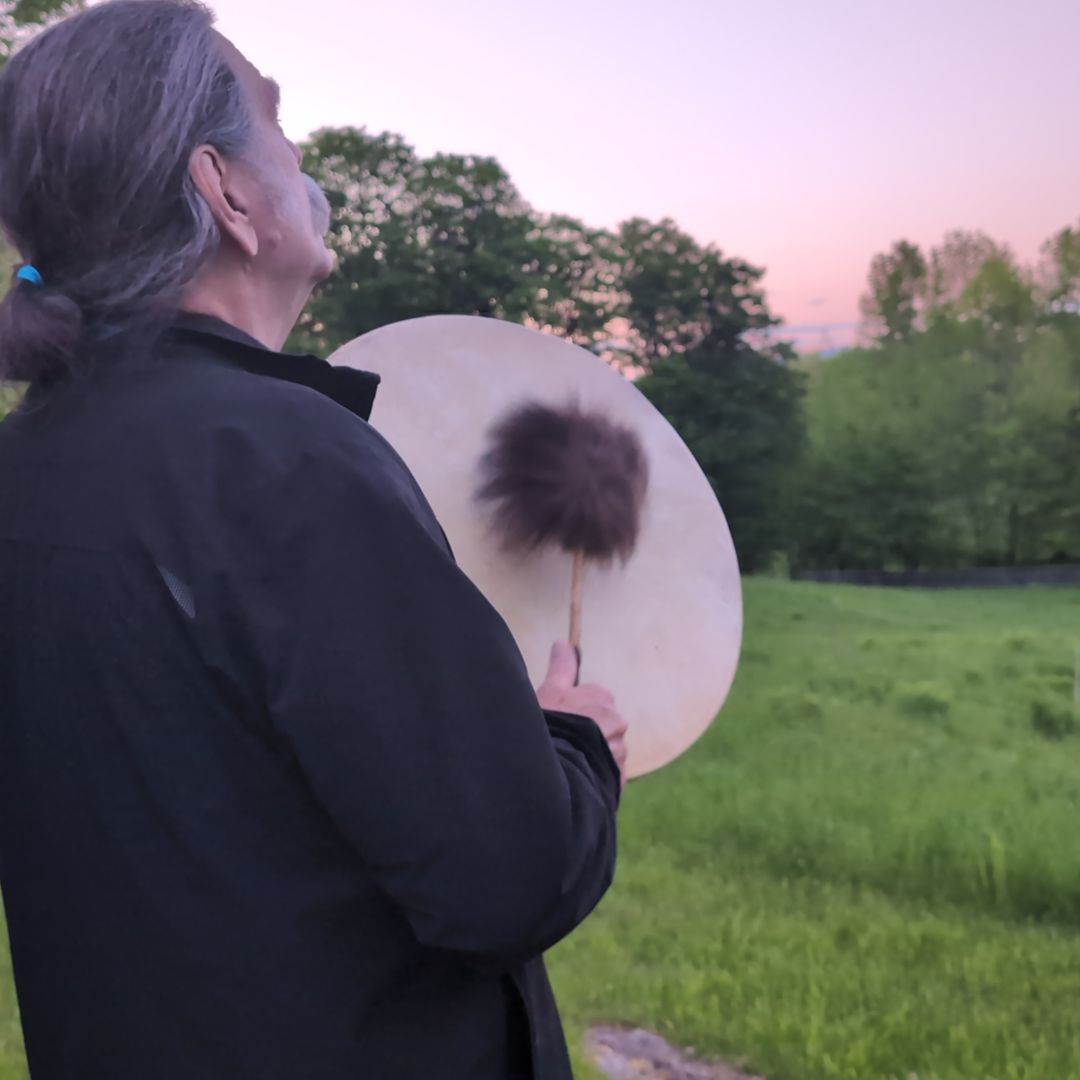
Natural Hide Frame Drums
Natural hide drums are usually made with deer, elk, buffalo, horse, or moose skin stretched over a wooden frame and laced tightly as they dry. Because the skin is a living, breathing material, these drums respond to humidity and temperature—loosening and deepening in moist conditions, tightening and brightening in dry conditions.
People are often drawn to hide drums because they:
- Carry a tangible sense of lineage and tradition
- Have a warm, organic, deeply grounding tone
- Offer a sense of relationship with the animal’s medicine and the land
For many, the connection with the animal spirit, and the knowledge that the hide is honored and used as medicine, becomes a central part of their relationship with the drum.
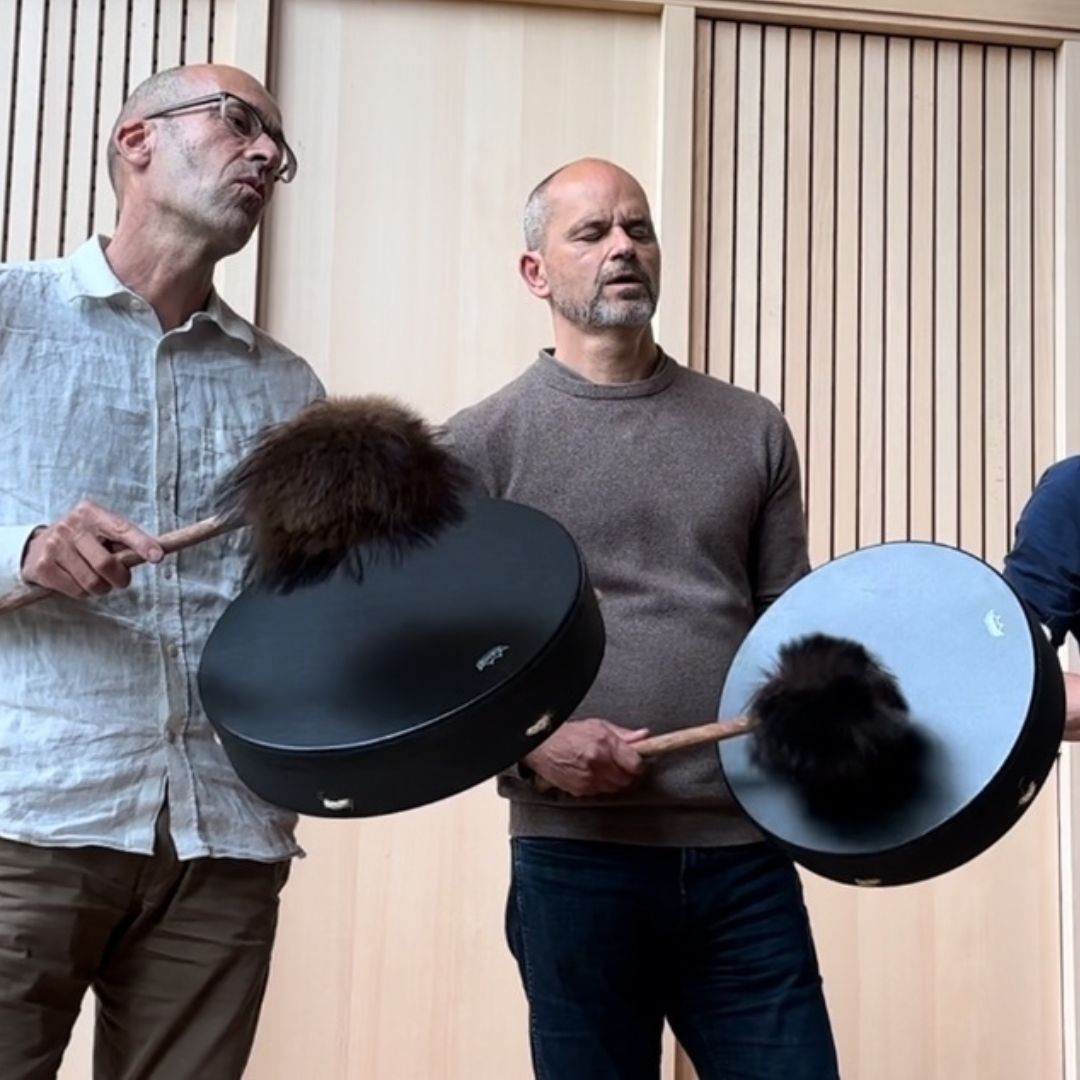
Vegan / Synthetic-Head Frame Drums
Vegan frame drums, like the REMO Buffalo and related models, use a synthetic head instead of animal hide. These drums were a true revolution in the drumming world—offering a stable, reliable voice that does not change with weather.
They are particularly helpful if:
- You live in a very humid or very dry climate
- You need a drum for sweat lodges or extremely moist environments
- You want an instrument that you can grab and play anytime without worrying about tone changes
- You prefer not to work with animal hide
A vegan drum is not “less spiritual.” It is simply a different path. The sacredness comes from how you work with the drum, not only from what it is made of.
3. Choosing the Size of Your Frame Drum
Size affects weight, tone, and how long you can comfortably hold the drum. A simple way to begin is to imagine yourself holding the drum for 20–30 minutes in ceremony, in a circle, or in practice. How does it feel in your hands, arms, and shoulders?
A general feel for different sizes:
- 10–12" Drums
Lightest and easiest to carry or pack in a backpack. Higher, tighter voice with less bass. Wonderful for travel, children, or very petite players. - 14" Drums
Still fairly light. Begin to introduce a small bass note. Comfortable to hold for longer periods, good for smaller adults who want a balance of tone and ease. - 16" Drums
A favored size for many. Offer a solid, satisfying bass note while remaining manageable in weight. Excellent for smaller-framed adults who still want a deeper voice. - 18" Drums
Our most common recommendation for average-sized adults. Full, rich, deep voice with clear bass and resonance. Heavier than 16", but for many people, this is the ideal “big drum” that still feels friendly to hold.
Larger drums beyond this range can be wonderfully deep but may be too heavy for many to hold for long ceremonies or standing practice.
If you’re unsure:
- Smaller, sensitive bodies often do well with 16".
- Most adults who want a strong, full voice love 18".
4. Choosing the Skin (For Natural Hide Drums)
When choosing a natural hide drum, you’re choosing both an acoustic quality and a relationship with the animal’s medicine.
From a physical standpoint:
- Deer and Elk
Generally the thinnest skins
Lightest to hold
Respond quickly to changes in humidity
Beautiful for those who want a lighter drum that is easy to carry - Horse, Moose, and Buffalo
Thicker, denser hides
Heavier in the hand
Tend to hold their tone longer in humid conditions
Offer a strong, grounded, powerful voice
A thick 18" buffalo drum, for example, may feel quite heavy compared to an 18" deer drum, even though the diameter is the same. For most adults, we recommend an 18" Elk or Buffalo as an excellent starting point—then refine from there based on build, climate, and medicine connection.
5. Climate, Humidity & Tone
Because natural hide is a living material, it breathes with the environment.
- In humid conditions, the hide absorbs moisture, loosens, and the tone becomes deeper and “flatter.”
- In dry conditions, the hide tightens, raising the pitch and sometimes making the drum feel almost too tight.
This isn’t damage—it’s just the drum being alive. You can work with this by adding heat or moisture as needed:
- If the tone is too low or flat, or the drum surface ripples:
Add gentle heat: brief sun exposure, a hair dryer on low, or placing it near (not on) a safe heat source. - If the tone is too tight or high:
Add gentle moisture: lightly mist the front and back with water or simply bring the drum into the bathroom while you shower.
For very humid climates, thicker hides such as buffalo, moose, or horse tend to hold their tone longer. Elk does reasonably well but may need more frequent warming. Deer is the thinnest and often best in drier climates, where it sings beautifully but may soften quickly in moisture.
If you live in an exceptionally dry climate, your drum may become very tight over time. Thicker hides will generally hold a more comfortable tone in these conditions, and careful storage (cool, dry, out of direct sun and away from heaters) will help.
If you want a drum that simply does not change with humidity, a vegan/synthetic-head drum is often the best choice.
6. The Medicine of the Animals
In many shamanic and Indigenous traditions, the drum is not just wood and skin—it is a medicine being. The animal’s spirit and qualities are honored and called upon as allies. For some people, this is the heart of why they choose a particular hide.
A simple way to choose is to sit quietly, drop into your heart, and ask:
“Which animal will support me in the work I wish to do?”
“Which animal do I want to walk with?”
“Which animal wishes to work with me?”
Often, one will come to mind, or you will feel drawn again and again to the same one.
Some of the medicine understandings often associated with the hides we carry:
- Moose – Feminine energies; the mystery and magic of life and death
- Elk – Strength, endurance, nobility
- Deer – Gentleness, innocence, the soft heart of compassion; a gentle lure into new adventures
- Buffalo – Manifesting abundance through right action; generosity of Spirit; sustenance for the People
- Horse – Power, travel, freedom; loyal companion and ally
Using the hide, like using all parts of the animal, can be, in many Indigenous philosophies, a way of honoring its life and completing the circle. When done with respect and gratitude, it becomes a way to carry those qualities into your prayers, your healing work, and your daily life.
7. Ethical Sourcing
At Sunreed™, we take the sourcing of hides very seriously.
The animals used for our drums are honored within the wisdom traditions of our drum makers. Hides are ethically sourced—for example, our horse hides come from horses that have died of natural causes. The animals are either wild or have lived with space and freedom. They are not from confined, tortured, or industrial slaughterhouse conditions.
We partner with makers for whom this respect is not a marketing point, but a way of life.
If working with animal hide doesn’t feel aligned for you, or you simply prefer not to, our vegan/synthetic drums offer a powerful and beautiful alternative.
8. Drums for Sweat Lodges
Sweat lodges are among the most challenging environments for any drum: intense heat, steam, and repeated moisture.
Natural hide drums will almost always loosen and drop in pitch in a sweat lodge. Over time, they can lose their voice completely if used heavily in this way.
Your best options for sweats are:
- A double-sided sweat lodge drum (buffalo hide)
Specifically designed to withstand the rigors of lodge rounds
The double-headed construction and the nature of buffalo skin both support tone stability - A synthetic-head frame drum (such as a 16" REMO)
Will not change voice in humidity
Can even be soaked in water and still play clearly
For pure stability of tone under extreme moisture, nothing compares
Single-headed hide drums may still be used in certain lodge contexts, but you should be prepared for them to soften, and you may need to dry them between rounds by the fire.
9. Drum Beaters: Soft & Hard Voices
The beater you choose will dramatically affect the voice of your drum.
Soft beaters have a cushioned core and a larger, flatter striking surface. They tend to:
- Draw out the deep, full bass of the drum
- Soften or almost remove the sharper overtones
- Create a warm, enveloping “heart beat” quality
This is often our top recommendation for ceremonial and meditative work—soft beaters bring out the heart of the drum.
Hard beaters have a firmer core, often ball-shaped. They:
- Bring forward both bass and brighter, higher notes
- Help the drum speak louder and cut through group sound
- Can feel more “driving” or “powerful” in some settings
Many practitioners enjoy having both: a soft beater for inner journeys and deep grounding, and a hard beater when they need the drum to lead a circle or carry across a large space.
10. Cases & Caring for Your Drum
Your drum is both resilient and vulnerable. A little care goes a long way in keeping it strong for years.
General care for natural hide drums:
- Avoid leaving your drum in a hot car, by a fireplace, next to a heater, or in direct sunlight for extended periods.
- Extreme heat can over-tighten the hide and eventually cause cracking.
- Store your drum in a cool, dry place, out of direct sun.
Using a good drum bag or case:
- Protects the shell and hide from scratches, bumps, and rapid climate changes
- Makes it easier to transport your drum to ceremony, classes, or wild places
- Keeps the drum out of direct UV light when stored
Most of our frame drum cases include padding and shoulder straps; some have backpack straps as well. Choose a case that matches your drum size and your lifestyle.


11. Drum Imagery & Spirit Painting
For some people, a drum feels complete in its simplicity: bare hide, wood, and the open sky. For others, there is a moment when an image, animal, symbol, or vision begins to ask for a place on the drumhead—a way for the spirit of the drum to be seen as well as heard.
At Sunreed™, this aspect of the work is held and carried by Dorothy Stone, whose drum paintings are often described as “alive” on the hide. Dorothy has spent decades exploring and refining her artistic expression across many modalities until her own unique voice emerged. When she paints on a drum, it is not just decorative work; it is a conversation with spirit.
In Dorothy’s approach, a drum painting is spirit art, not technical illustration. The images, animals, or symbols that appear are guided by the voice of the drum itself and the spirit that wishes to be expressed through it. While you may hold a particular vision, the process is not about forcing the drum to match a fixed idea. It is about listening together—Dorothy, the drum, and the spirit of the image—to discover what wishes to emerge.
A few key qualities of this process:
- Dorothy will usually begin by listening to your intention and the vision or feeling you carry.
- She then attunes to the medicine of that vision and to the drum itself.
- The painting unfolds through this relationship.
- The result often feels less like an “added decoration” and more like an aspect of the drum that has been revealed.
Because the process is relational and energetic, there is no guarantee that the final image will be a perfect match to a preconceived mental picture. Instead, the invitation is to meet what appears with curiosity, respect, and gratitude—trusting that the drum and spirit have spoken in their own way.
For some people, adding this level of imagery is a natural and powerful extension of their relationship with the drum. For others, a bare, unpainted drum feels truest. Both are completely valid paths. If you feel a genuine call toward spirit painting, it can become a beautiful, ongoing dialogue between you, the drum, and the unseen.
12. Ceremony, Cleansing & Awakening Your Drum
However you relate to tradition, many people find it meaningful to welcome a new drum into their life.
A simple approach might include:
- Cleansing
Use the smoke of sage, sweetgrass, cedar, or palo santo to cleanse yourself, your drum, and the space. Offer gratitude to the animal, the tree, the maker, and the lineages that carried this wisdom forward. - Orientation
Take the drum outside, if possible. Turn slowly to the four directions, then above and below, offering a few beats and your prayers to each. - Intention
Speak from your heart:
How do you wish to use this drum?
What do you wish it to carry?
How do you hope it will serve you and others? - Sounding
Play. Sing, chant, hum, or simply breathe with the sound. Let this be the beginning of an ongoing conversation.
There is no single “right” way to awaken a drum. What matters most is your sincerity and the quality of your attention.
13. Finding Your Drum with Support
Choosing a frame drum—hide or vegan—is partly practical and partly deeply personal.
If you’re still unsure, you don’t have to navigate it alone. We are glad to:
- Talk with you about your body size, climate, and intended use
- Explore whether hide or vegan is right for you at this time
- Help you choose a size and skin that fits your hands and your heart
- Schedule a virtual auditory shopping session, so you can listen to a select group of drums side by side
In the end, the “right” drum is the one you feel yourself returning to, again and again. The one whose voice feels like a friend. The one you are willing to listen to as much as you ask it to listen to you.